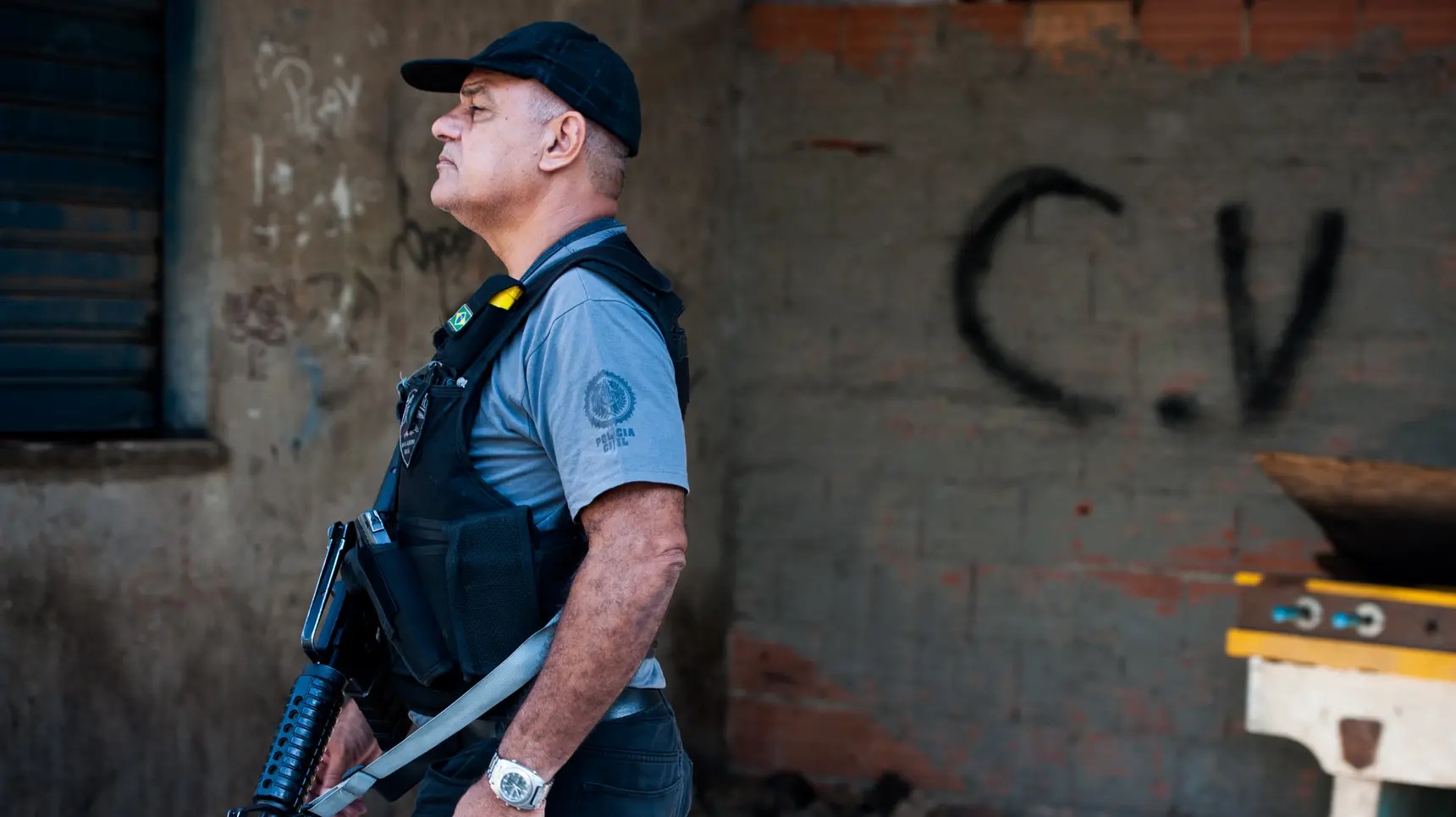
With a pair of pliers, two criminals from one of Brazil’s largest factions escaped from a maximum-security prison
In the calm of Carnival night, with the prison under maintenance work and failures in video surveillance and lighting, the two inmates carried out their escape. The government says they had no outside help.
Two members of Comando Vermelho, one of Brazil’s largest criminal factions, escaped from the Federal Penitentiary of Mossoró, one of the country’s five maximum-security prisons. According to the Brazilian press, this is the first security breach since the federal penitentiary system was created in 2006 under President Lula da Silva.
In the early hours of Wednesday, Rogério da Silva Mendonça, 36, and Deibson Cabral Nascimento, 34—who were being held in separate cells—reached the prison roof in Rio Grande do Norte by climbing light poles. With no bars or other protective systems in place, the two Comando Vermelho members managed to flee. Using a pair of pliers left behind from ongoing maintenance work, they cut through the wire fencing—and, consequently, gained their freedom.
According to the newspaper Estadão, external cameras confirmed that the fugitives had no one waiting to help them outside the prison. On foot, they headed to a nearby house, where they stole food and clothing.
Speaking to reporters, Justice and Public Security Minister Ricardo Lewandowski explained that several prison cameras and lamps were not working. While no further details about the escape were given, the investigation points to a failure in inspection. It also remains unclear whether prison staff may have collaborated.
“It was a whole set of circumstances that made this escape possible for the two inmates. That’s why we don’t believe it was something orchestrated from outside, planned with lots of money, resources, vehicles waiting, or a helicopter. It was an escape that came very cheap,” said Lewandowski, quoted by Estadão.
Meanwhile, the National Secretary of Penal Policies at the Ministry of Justice, André Garcia, admitted it would not have been possible for the escape to happen “if security protocols had been followed.” “It’s very likely that the security procedures were not applied as they should have been,” he stressed.
Homicides, robberies, two escapes: who are the two Comando Vermelho members?
This is the second time these two inmates have broken out of prison. Both were involved in a 2023 riot at the Antônio Amaro Alves Prison. The uprising, which left five dead, led to their transfer to Mossoró. Brazil’s five maximum-security prisons only hold inmates linked to the leadership of criminal organizations or gang members responsible for extremely violent and serious crimes. Such is the case of Mendonça and Nascimento.
Nascimento’s first record came at age 14 for carrying a weapon, followed by robbery the next year. As an adult, he was accused of several crimes, including aggravated homicide and a case of latrocínio (killing to steal), which earned him a 28-year-and-nine-month prison sentence.
Mendonça has been in prison since 2015 for drug trafficking. According to g1, while incarcerated, he ordered the killing of a 16-year-old who was also a CV member.
The criminal organization Comando Vermelho is Brazil’s second-largest and oldest faction. Its main rival is the Primeiro Comando da Capital (PCC), with whom it disputes drug-selling territories in São Paulo. The influence of both factions inside prisons across Brazil’s 24 states has been growing, with CV’s dominance particularly noted, reported Folha de São Paulo.
Brazil’s prison system: maximum-security federal prisons
Created in 2006 under President Lula da Silva, the federal penitentiary system was designed to return to state authorities the ability to manage prisons, given the interference of PCC and CV. Because of the type of inmates they hold, these prisons operate under a stricter, specialized security regime. According to the federal government, their structures are reinforced, and prison guards use metal detectors to search inmates. Both Mendonça and Nascimento were under the Differentiated Disciplinary Regime, which isolates them from the rest of the prison population.
Cells measure six square meters and are individual. Prisoners are searched daily whenever they leave their dormitory, their cells are inspected, and they move handcuffed and accompanied by two guards. The prison also has an internal surveillance system with cameras.
About 300 police officers and three helicopters are searching for the fugitives, who are believed to still be within 15 kilometers of the prison, Folha de São Paulo reported. Facing his first crisis as Minister of Justice and Public Security under Lula’s government, Lewandowski ordered reinforcements to the prison system, including improved video surveillance, construction of walls, and the suspension of yard time and visits.
Photo: Getty Images
Post a comment