Life Behind the Counter: A Normalized Reality
What is it like to work in the restaurant industry? The story of Lena, a waitress, shows us what it means to live under a barrage of insults, whims, and humiliations. To watch your physical and mental health waste away. Every day is a battle.
This article was originally published on May 29, 2023, in TejoMag magazine. The respective link is no longer available online.
It is 8:30 in the evening, the sky is gray, and the streets are still wet from the brief torrential rain that hit the greater Lisbon area hours earlier. The weather emptied the place, driving customers away. This time, Lena—as everyone who knows her calls her, including at the restaurant where she works—was lucky enough to put away the outdoor tables and umbrellas before the storm arrived.
Helena Rogério steps out of the restaurant and lights a cigarette, smoking it as she walks to the bus stop. She is 56 years old, 32 of which have been spent behind that counter, serving coffee and waiting tables, near one of the wealthiest and most luxurious areas of Lisbon. The month of May is drawing to a close and the summer heat is already settling in. The outdoor seating area will fill with people and orders to rush through; the days will grow longer and her return home will happen later and later.
On her way to the bus stop, just a few yards from her workplace, Lena lets her harsh daily reality show. Barely able to lift her feet off the ground, her steps heavy, she reaches the edge of the road, which has two lanes in each direction. Carelessly, she crosses it, stopping halfway to let cars pass. Another ten or fifteen minutes and the bus arrives, taking her to the train station. On weekdays she is more talkative, but on Saturdays—the last workday before her only day off each week—she shuts down from reality. Every task is done almost on autopilot; she can hardly answer anyone who speaks to her, so overwhelming is her physical and psychological exhaustion.
The 15-Hour Shifts
Contrary to the law, there is no time clock at the restaurant. If there were, her story might, in part, be different. She would clock in at 11:00 a.m. and leave at 8:00 p.m., as her contract states. Currently, she finishes work thirty minutes or an hour later. In total, a workday can last 13 hours straight, her start time having been set by the boss at eight in the morning. Under the Labor Code, she is allowed to work eight hours a day. If she works more, she must be compensated with reduced hours on the following days or with days off. Which never happens.
The establishment has changed management six times, always retaining its original character: a large space with 52 seats, a long counter with a display case full of assorted pastries and savory snacks, and an outdoor area. The lunch menus are typically Portuguese. It was nearly two decades ago that António bought the place and decided to keep Lena on as an employee. In the early years, the workload was normal, as it had always been under previous bosses. But right in the middle of the 2008 crisis, she began working two shifts. She worked from 7:00 a.m. to 10:00 p.m., with a single one-and-a-half-hour break. She put in those 15-hour days until 2011, when she demanded to have a normal schedule.
At that time she was going through a divorce, and the fight for custody of her son pushed her to threaten her boss. “Before I went to court, I told him I would file a complaint against him if he didn’t reduce my hours.” António cut her schedule to 11 hours a day so she could have time to be with her son, who was 11 years old at the time. It did no good. The court decided to award custody of the child to his maternal grandmother, citing Lena’s lack of availability. After that, she only saw him on Saturday night, when she would pick him up, and on Sunday afternoon she had to drop him off at her mother’s house. “From that age on, I missed a lot. There were so many moments my mother was there for and I wasn’t. When I worked under the other managers, I had time to be with my son because I had a decent schedule,” she says, visibly shaken. “It was the worst thing that happened to me while I was there.”
Along with that episode, Lena blames her boss for the direction her marriage took. “To this day, my ex-husband says that if I had led a normal life, maybe things wouldn’t have turned out the way they did.” She continued to work that many hours until three years ago, when she saw them increase again. Around summertime, in August, when the other restaurants and cafés in the area close for vacation, she was asked to help open and close. “I started out helping, and then I kept doing it because he decided it was an obligation,” she says, shrugging.
“Whenever I talked to the boss, he’d tell me that if I wasn’t happy, I could leave.” But Lena didn’t give up. She chose to stay at the restaurant, insisting that her demands be met. An envelope with 100 euros, handed over at the end of the month on top of her salary, to pay for the extra hours—that was all she got. “He says the hundred euros extra he gives me covers the overtime I work. No matter how many extra hours I do, he insists there isn’t enough business to justify a bigger payment.”
“He Implies That I’m Not Capable”
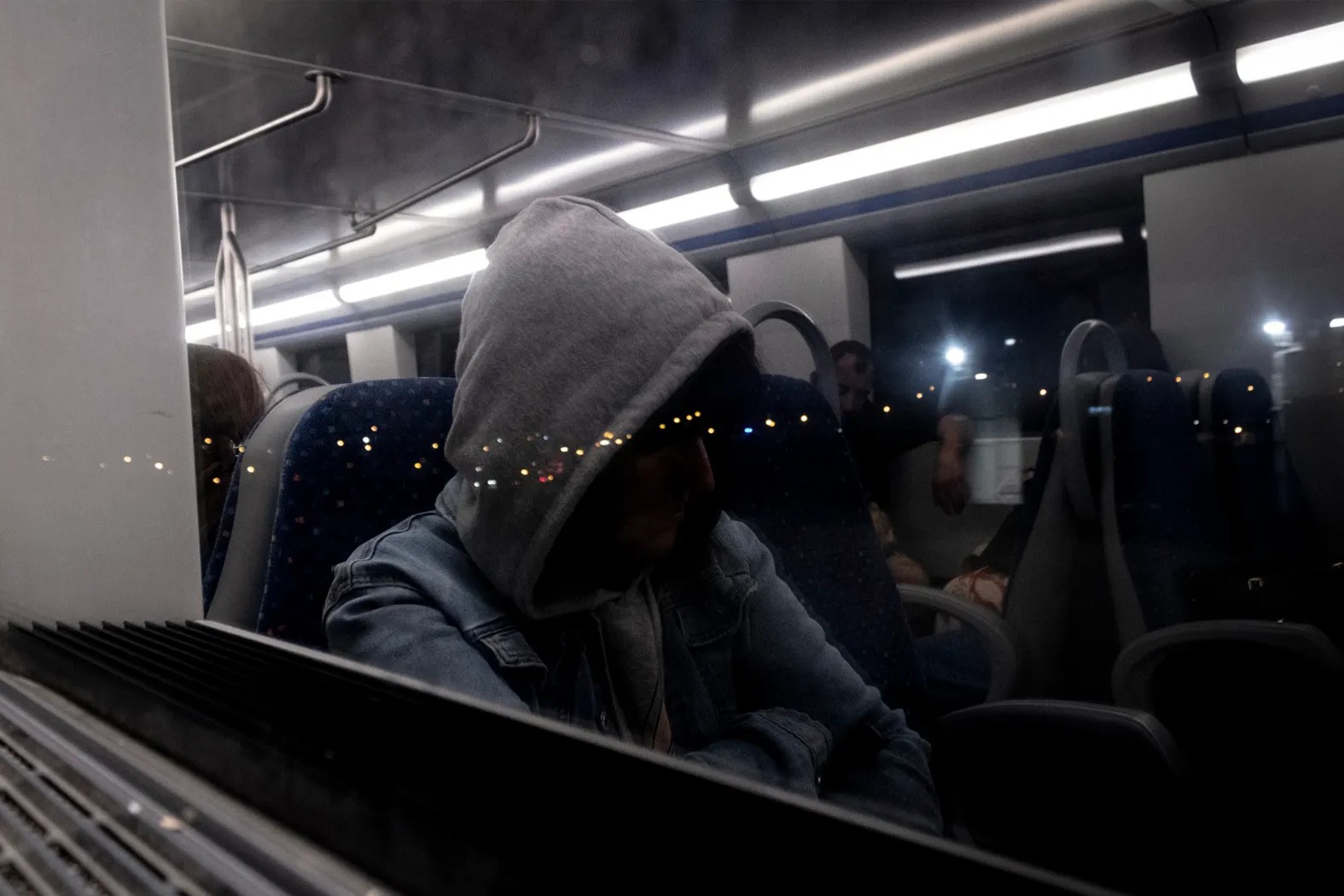
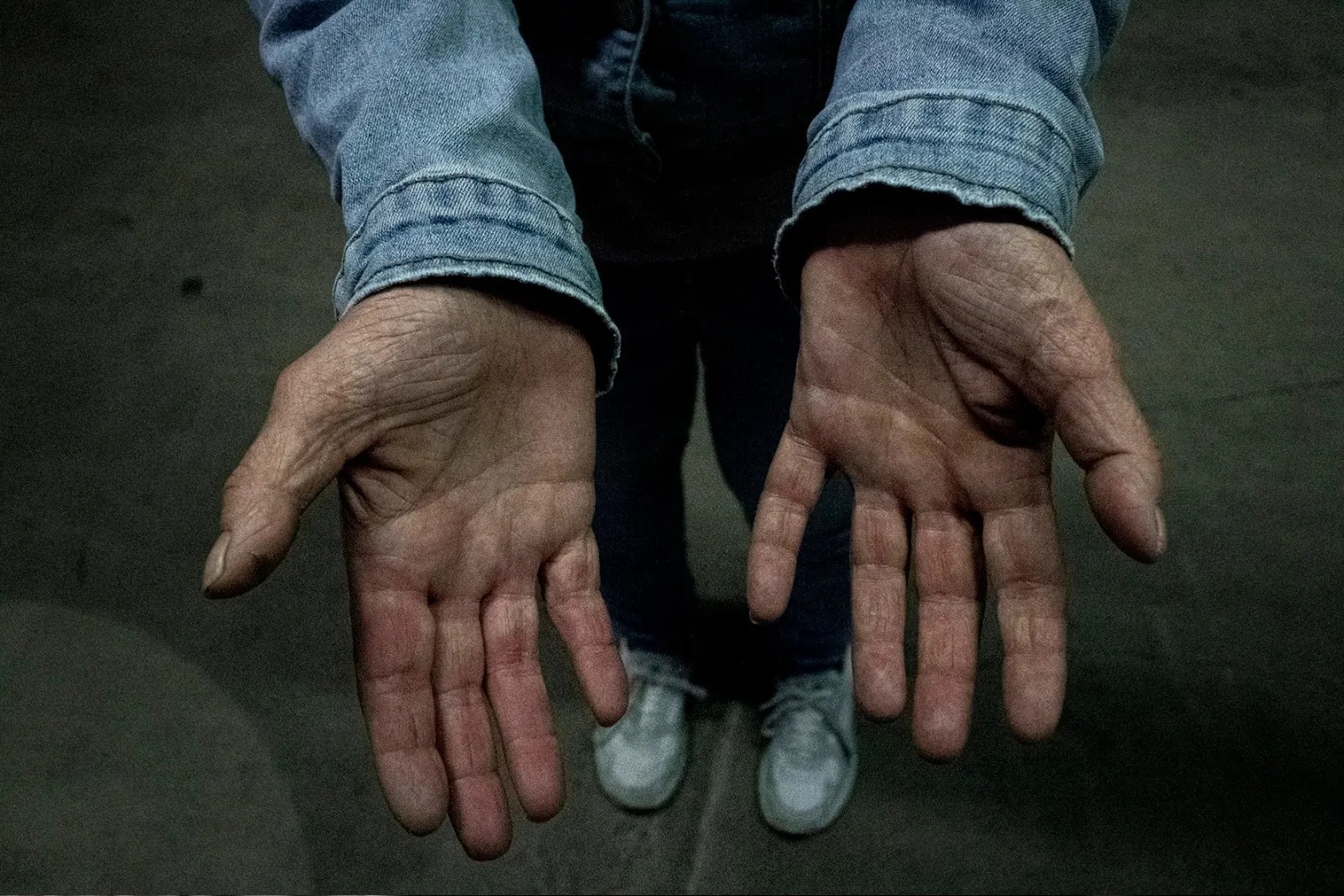
On the bus ride to the station, where she catches the train to the South Bank, she stands among many other workers and students who fill the narrow aisle. She holds onto one of the vehicle’s unsteady handles with one hand and carries a small backpack with the other. The calluses, the cracks, the wrinkled and dry skin are another sign of the harshness of her work. Her back, visibly bent, gives her a heavy appearance that contrasts with her personality.
Serving the public was the main reason that, at 23, she traded an office job for a spot behind the counter. The restaurant’s customers are mostly neighborhood residents, workers from the nearby office district, or simply construction workers. They all know her for her friendliness and humanity. They are also witnesses to her daily life in the establishment. The boss kept laying off workers, always using the crisis as an excuse. Today, she is the one who waits on tables, handles lunch orders, and works the counter—all by herself.
While she serves one customer, she clears the cups, saucers, and glasses from the next table, carrying them in her bare hands with no tray. She reaches the counter and places them in the dishwasher. People keep crowding in, standing, and as she tends to them, more customers arrive on the outdoor terrace. At lunchtime, on top of these tasks, she adds the orders she relays to the kitchen and serves when they are ready. Sometimes, during one of her only breaks—a 30-minute lunch—she doesn’t even finish eating because no one else is at the counter and the boss makes her get up. At the end of the day, she mops the restaurant floor, lifting the heavy indoor tables one by one, and brings in the outdoor tables. On Saturdays, the cook is off and the kitchen assistant does her work. On the days the assistant is absent, it is Lena who has to handle all the kitchen cleaning, all while keeping an eye on the counter, the tables, and the outdoor area in case a customer arrives.
To her, the situation “isn’t normal,” she says. “When you’re working the tables, you’re supposed to handle the outdoor area too, and whoever is at the counter is supposed to serve the outdoor tables and make the coffees. I do the counter, the outdoor area, and the tables. I manage because I know how to coordinate things well. Someone with little experience wouldn’t be able to.” Lena recalls that all the previous managers worked alongside her. She stayed at the counter and they waited tables. António has a different approach.
The other day, near closing time, while she was in the locker room changing clothes, the boss called her. She was forced to come out, still in her undershirt, to take a glass from a customer who was on the terrace and had stood up to bring it to the counter. At that exact moment, António was standing near the cash register and chose not to handle the request.
His orders are always delivered through shouting and insults, Lena explains. “He mistreats us in front of the customers. He scolds us for no reason, tells us off for no reason. We’re doing our job, and in his eyes everything is always wrong, even when it’s right.” Although the cook and the kitchen assistant don’t escape the abuse, she is the main target. “He says we’re all a bunch of good-for-nothings, that he’s stuck with worthless employees,” and above all, “he implies that I’m not capable.”
The Victim and the Villain
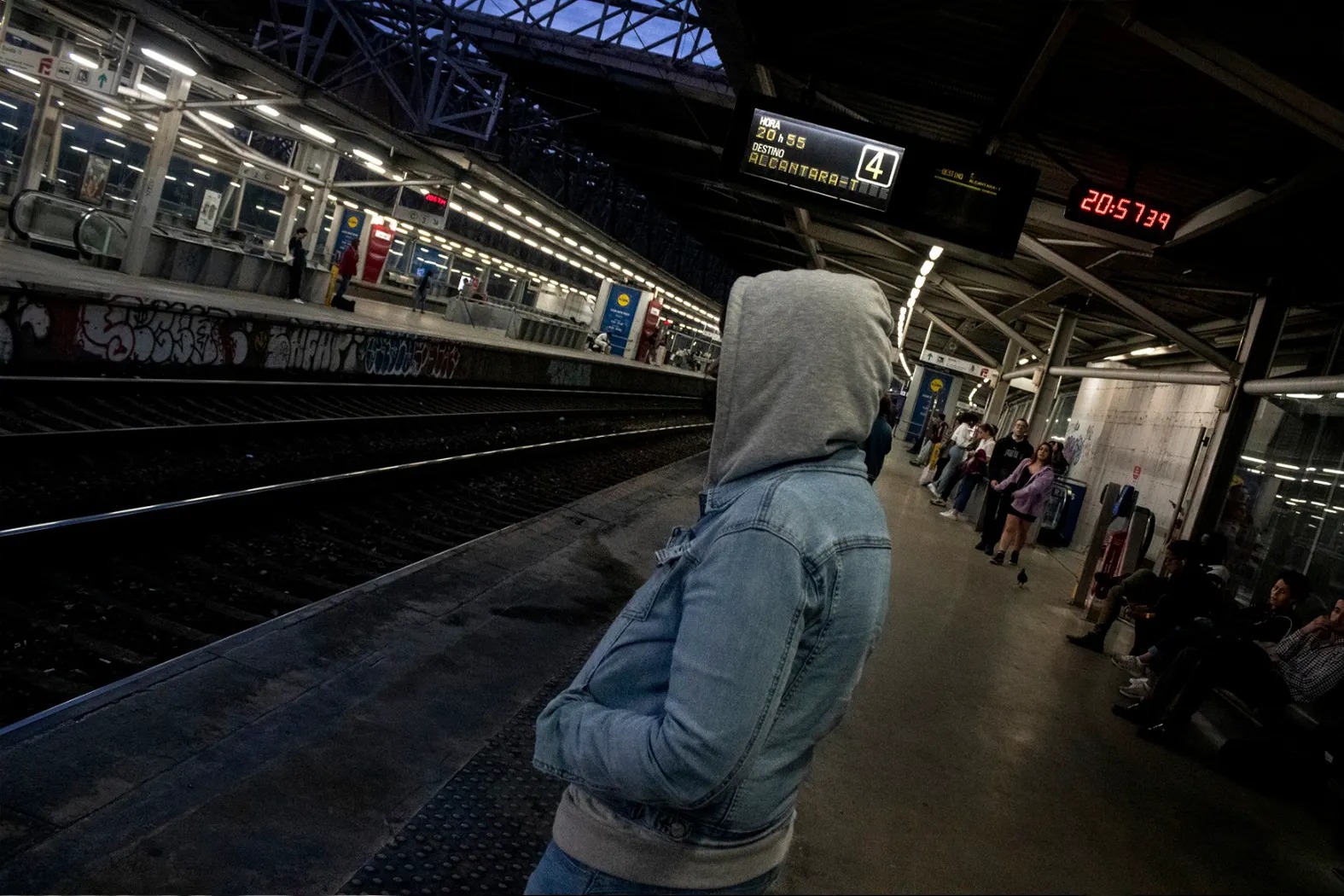
When she reaches the station platform, she waits for the 9:07 p.m. train. A short time later, a short, thin lady waves at her. It’s her neighbor, who a few months ago started giving her a ride home, so that when she reaches the other bank she doesn’t have to wait for the bus that drops her at her doorstep. In their daily conversations, she can’t help but talk about her workday, recalling former coworkers who used to work alongside her.
The last one was working without a contract and quit because António didn’t pay her the full amount she was owed at the end of the month. She was a young woman just starting university. The one before her, also a student, made the same decision because of the sheer volume of insults and pressure she endured. She left without being paid her vacation allowance or her final week of work. They weren’t allowed to leave a single table uncleared, even if there was a long line of customers waiting to be served. “They can’t take the pressure. And they’re not about to put up with the insults,” notes Lena.
The founder of the Nós as Pessoas project, Paulo Amado, says he shares that opinion. “There’s a new generation that won’t put up with that.” He’s referring to “a never-ending story, a strange tradition in how kitchens are run, which nowadays is impossible to tolerate.” In 2020, the project was launched to offer free psychology consultations to workers in the sector, with the aim of breaking the “endless victim-villain cycle.” This cycle begins with the existence of a villain, who is in a higher hierarchical position—“the top boss”—and a victim who has no power. The villain is only a villain because he was once a victim. “As [the victims] moved up in their careers, they turned into villains to create new victims,” he concludes.
António fits that explanation. His abusive nature revealed itself and worsened over the years, Lena observes. “When I first met him, he wasn’t like this. He’s getting worse and worse. He has no patience anymore. It’s his age and the drinking.” Her 64-year-old boss’s days begin early in the morning with the opening of the restaurant, before she arrives. Always dressed immaculately, in a white shirt, black trousers, and a red apron bearing the restaurant’s name, throughout the day he discreetly approaches the counter and helps himself from the shelf of alcoholic drinks. As his condition deteriorates, he raises his voice and becomes more spiteful, sometimes using as an excuse the way he was treated when he was an employee. In his view, the “kicks to the shins” he received back then should now be applied to his own employees.
The Wish to Get Sick
That is the mildest of the threats Lena hears. The boss picks on her appearance, the way she dresses, the way she walks and talks, and he makes nasty comments about her private life. In the early years she was affected and wouldn’t answer back, but today those insults don’t bother her as much because she knows her own “capabilities.” While she was going through her separation, the 15-hour days at the restaurant made her “consider going on sick leave.” “I actually thought about making myself sick for any reason, so I could go to the hospital and get some rest. I was desperate. I sank into a huge depression. I lost a lot of weight, I was always sad and depressed, and he made it worse. It was as if he took advantage to put me down a little more.”
She never ended up seeing a psychologist or even a doctor. “At the time I really needed to ask for help, but my schedule doesn’t give me time to go to the doctor. I end up missing scheduled medical tests because I have nobody to cover for me.” The psychological aggression she suffered took a toll on her physically. “I started having stomach problems, intestinal problems, chronic gastritis from eating poorly and in a hurry, kidney problems, back problems, and varicose veins.”
According to Nuno Mendes Duarte, coordinator of the Psychology Workshop, a partner of the Nós as Pessoas project, which currently has a full waiting list, the 11 patients they accompanied reported similar complaints. Most of them were waiters, cooks, and restaurant managers, between the ages of 26 and 58, with “very high levels of anxiety, associated with persistent worries and thoughts that caused distress.” The pandemic worsened the problems that already existed: “the management of emotions such as irritability and anger, and difficulties in social interaction.” Another concern was “the uncertainty and the future of their jobs.”
“I Don’t Know If They’re Not Trying to Avoid Shutting Down More Businesses”
Likewise, uncertainty and responsibilities kept Lena from quitting 12 years ago. “I couldn’t afford to. My ex-husband wasn’t helping me support my son. I had to work those hours to earn more money and pay the household bills.” At the moment, she has no plans to look for another job. “In waiting tables, until you’re 36 you’re considered young, but after that you’re old. What keeps me there is knowing I have rights, because of my 32 years in that place. If the boss sells the business and the new management doesn’t keep me on, he has to pay me what I’m owed.”
In the broader context, Paulo Amado acknowledges that although tourism is very important for Portugal, it “rests on a workforce that is subjected to intensive labor, with long hours and done during holiday seasons.” The crisis the restaurant industry is going through also weighs on Lena’s decision. “I get to the end of the month and I have that set amount of money to pay my expenses. I have a permanent contract, and if I move somewhere else, nothing is certain. They might not pay my wages, or they might pay me as an independent contractor, or put me on a six-month contract and then let me go so they don’t have to make me permanent.”
Her work environment has not gone unnoticed, either by customers or by some labor inspectors. “I even had someone on the phone with me once, asking if I wanted them to show up at the restaurant. Since at the time I was separated and had to pay my bills, I said no.” If an inspection were to come to the restaurant, the most likely outcome is that it would be shut down. “Things are so bad for the few restaurants that still exist that I think they [the inspectors] even avoid doing it. They’re in bad financial shape and have very little business. I don’t know if they’re not trying to avoid shutting down more places.”
The journey home is long, despite the company. In total, it takes an hour and a half. The next day, for another ten years and some months, the long shifts, the mistreatment, and the harassment will continue. What is left for Lena is the hope that the management will change.
The identities of those interviewed have been concealed for their protection.
Photos by: Rafael Baptista
Post a comment