In Limbo Between Two Homelands
Made Portuguese and Then Abandoned by the State. The Traumas and Struggle of a Former Mozambican Combatant.
[João Novais Moliua walks briskly up the street toward Lisbon’s Central Mosque. It is December 26. The city is returning to its usual pace, still tipsy with the Christmas spirit. The streets remain calm. Sidewalk cafés are nearly full, yet the streets feel deserted. It is almost four in the afternoon. The call to prayer has already sounded. Reaching the door, João doesn’t hesitate; he goes straight in. This is the place he goes to every day. The only place where he feels at ease. Where he finds the peace that was stolen from him 56 years ago.]
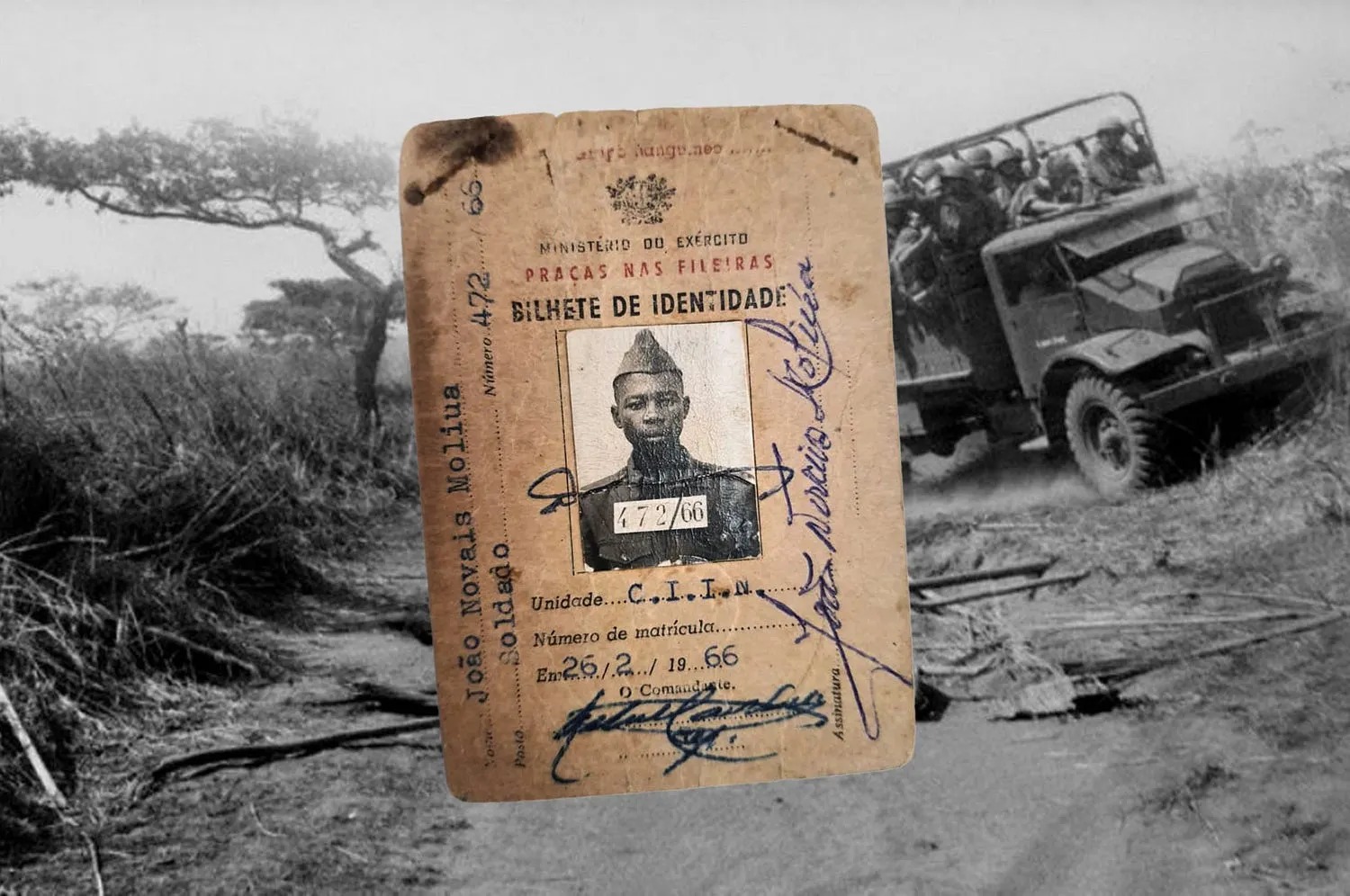
There is blood on the ground and a weapon in his hand. His comrades are gunned down in front of him. Some have no arms, no legs. João tries to help them all. To pull them to him. It is imperative that he does. He wants to help them, to ease their suffering. But he cannot. They die in his hands. Suddenly, he wakes in a suffocating despair. Screaming. Being awake is the only way to know he is safe. Every night, as soon as he closes his eyes, he returns to the scene of the colonial war he lived through between 1966 and 1968 in Niassa, fighting alongside the Portuguese against the soldiers of the Mozambique Liberation Front (FRELIMO). Against his own countrymen. Yet for João that is a detail. Does he consider himself more Portuguese or Mozambican? “Portuguese,” he answers, as if asked his name. “It was the Portuguese who controlled Mozambique.”
He was born an Indigenous person in the Portuguese Colonial Empire, in Inguri, today the city of Angoche. In the Portuguese records he is listed as João. Ismael was the name his parents gave him—practitioners of Islam. He, too, received the blessing of Allah, despite the strong presence of the Catholic Church in his homeland. At 16 he saw the end of the Indigenous Statute—which divided the population into three classes: the Indigenous, the assimilated, and the whites—and became a first‑class citizen, gaining full access to Portuguese citizenship. It would not be long before war broke out in 1964 and he was called to serve the motherland, joining the Army’s ranks in the 19th Hunter Battalion as a rifleman.
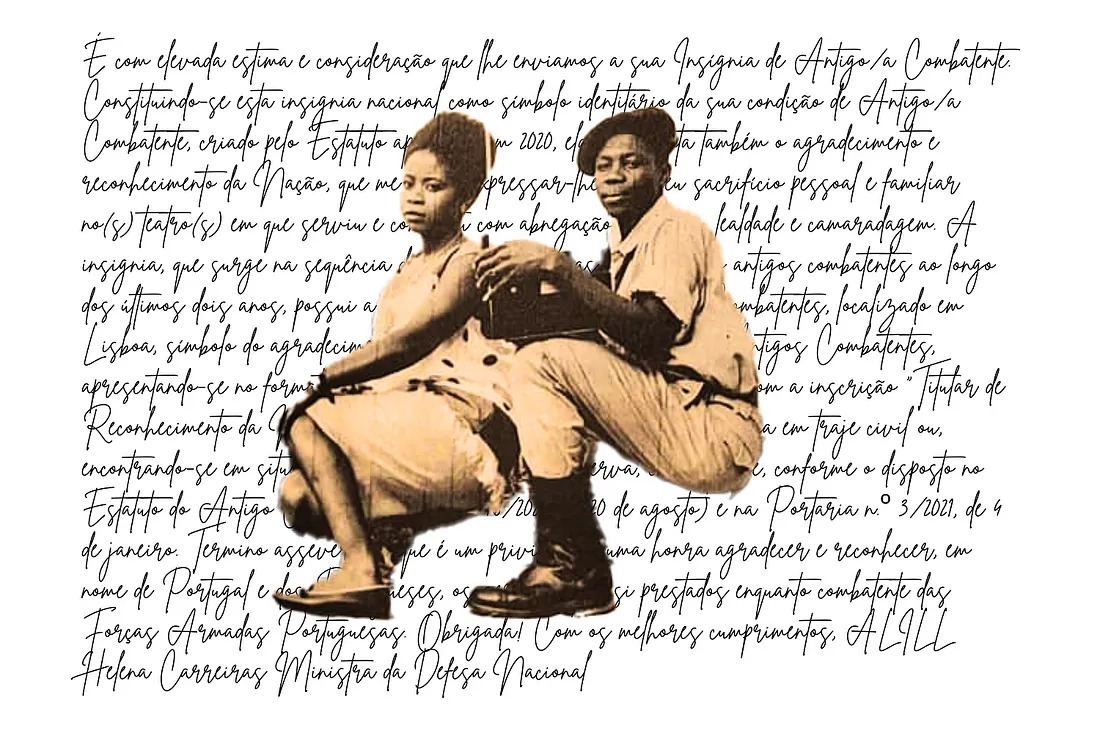
By 1974 Mozambique was no longer Portuguese. Those born now were Mozambicans, and those who had once been born there, destined to be Portuguese—like João—were left in the limbo of two homelands. Abandoned by the country that had thrown him into combat, he left Mozambique for that very soil, convinced it was his too. He arrived in Portugal 22 years ago. “I should have come straight away, but I had no information,” he says with a note of lament. The information kept failing him when he found himself tangled in deep bureaucracy and the paperwork of a process that never seems to reach a conclusion. “I am Portuguese,” he repeats, speaking indirectly to those who now deny him the rights that flow from the nationality they imposed on him.
[João enters the mosque and forgets that this time he is not alone. He looks back and says, “Miss, miss! Come in quickly!” For a moment he seems to forget something. When he looks again, he remembers. “Put on this cloak so you can watch the prayer.” In the atrium, next to the prayer hall, he removes his shoes, picks up a chair, and places himself on the left side of the men as they pray, prostrating themselves.]
When he arrived in Portugal he was housed at the Signal Regiment barracks on Rua dos Sapadores, along with other former Portuguese combatants of Guinean and Mozambican origin. Without ever being clearly told why, João explains, in 2013 they were ordered to leave. “They swept us out of there. There is xenophobia in the Armed Forces Association. There is racism!” he shouts. He roamed the streets, and stairwells of apartment buildings were his home for four years. Many comrades went back to Africa, with a plane ticket paid for by the Portuguese state and six thousand euros in their pockets. He refused. “I didn’t come here to beg for alms,” he asserts. “I worked three years under fire.” His belongings—the memories of a lifetime—stayed at the barracks. There is no way to recover them; he no longer knows what has become of them.
Lately the headaches have worsened. One day in particular won’t leave his mind, replaying incessantly. The war was intensifying; he and his comrades were attacked systematically. He hears a loud blast. That blast returned, grew louder, still echoing in his head and impairing his hearing. The post‑traumatic stress has gotten worse. This is why the specialist who treats him at the Júlio de Matos Hospital wrote a letter, which he will present to have his evaluation and classification process as a Disabled Armed Forces Member (DFA) reopened.
The process has been dragging on since 2000, when he first set foot on the soil of his homeland. It was shelved two years later and reopened in 2006. The physical injuries Moliua has on his left leg, the gastritis, and the kidney problems do not even count as a disability. Everything comes down to one percentage: 30%. That is the number he needs to be a DFA. A comrade recommended he seek help from the Apoiar Association, which provides psychological and legal support to ex‑combatants and their families. Through them he managed to have the Army medical board recognize a 20% disability stemming from war stress. João’s case is not unique. Getting recognized as a DFA for war stress is slow and becomes even more complicated in cases involving the Army branch of the Armed Forces.
[Before long more worshippers arrived, but they noticed the female figure seated farther back. The rest became aware as well. A disorderly murmur rose, but the prayer continued. A mosque employee removed the reporter—the disruptive element—from the room, and quiet settled back in.]
Through acquaintances João managed to get a roof over his head. Next year the rent will increase to 470 euros, making the search for housing another battle underway. His current landlord, with whom he lives, plans to get married, and the former combatant already knows what that means. “I’m still not completely settled. I’m a nomad.” He receives a monthly disability and old‑age pension of 400 euros. “Food is a problem…” He scrapes by. The lack of money after arriving in Portugal made it impossible for him to attend the funerals of two of his children, who were in Mozambique. That situation would have been different if he had received the pension supplement he would be entitled to if classified as a DFA. Just as now, he would not be at risk once again of living on the streets.
[Focused on his prayer, João is unaware of what just happened. A few seconds later he returns to the mosque’s reception area, arguing with the employee who expelled the reporter from the prayer space. “I don’t understand why the young lady can’t watch the prayer,” he tells him. “There is a room reserved for women,” the employee insists. The back‑and‑forth drags on, and both seem to be running out of patience.]
That was his initial goal: to come to Portugal to claim his rights as a citizen, as a former combatant of the Portuguese Armed Forces, and to get treatment. But at age 77, Moliua reveals that he “wanted to evolve further” and that also brought him here. Even after the colonial war ended he went to live in Lourenço Marques, because staying in his home region was out of the question. When he thinks about Mozambicans, his feelings toward the Portuguese become contradictory. “They enslaved us,” he notes, immediately regretting it. “In quotation marks… it’s not exactly enslaving… I mean… they taught us to study… to be civilized. Colonized us is the way to say it, because the African was violent and aggressive.” “It was politics,” he comments, categorizing the causes of the war in the same way.
When he was placed on reserve while Mozambique was still an overseas province, he worked for the Portuguese state at the CTT—the postal and telecommunications service. That was when he was arrested by the PIDE, which tightly controlled people’s lives. After the conflict ended, FRELIMO began gunning down Mozambicans who had served in the Portuguese Army, including commandos. “Samora Machel was not at ease. He didn’t like us. That’s why I don’t want to go there… it’s not that I don’t want to, but here I feel fine.” In Mozambique, those who hold dual nationality—Portuguese and Mozambican—and are former combatants are not looked upon favorably by the government.
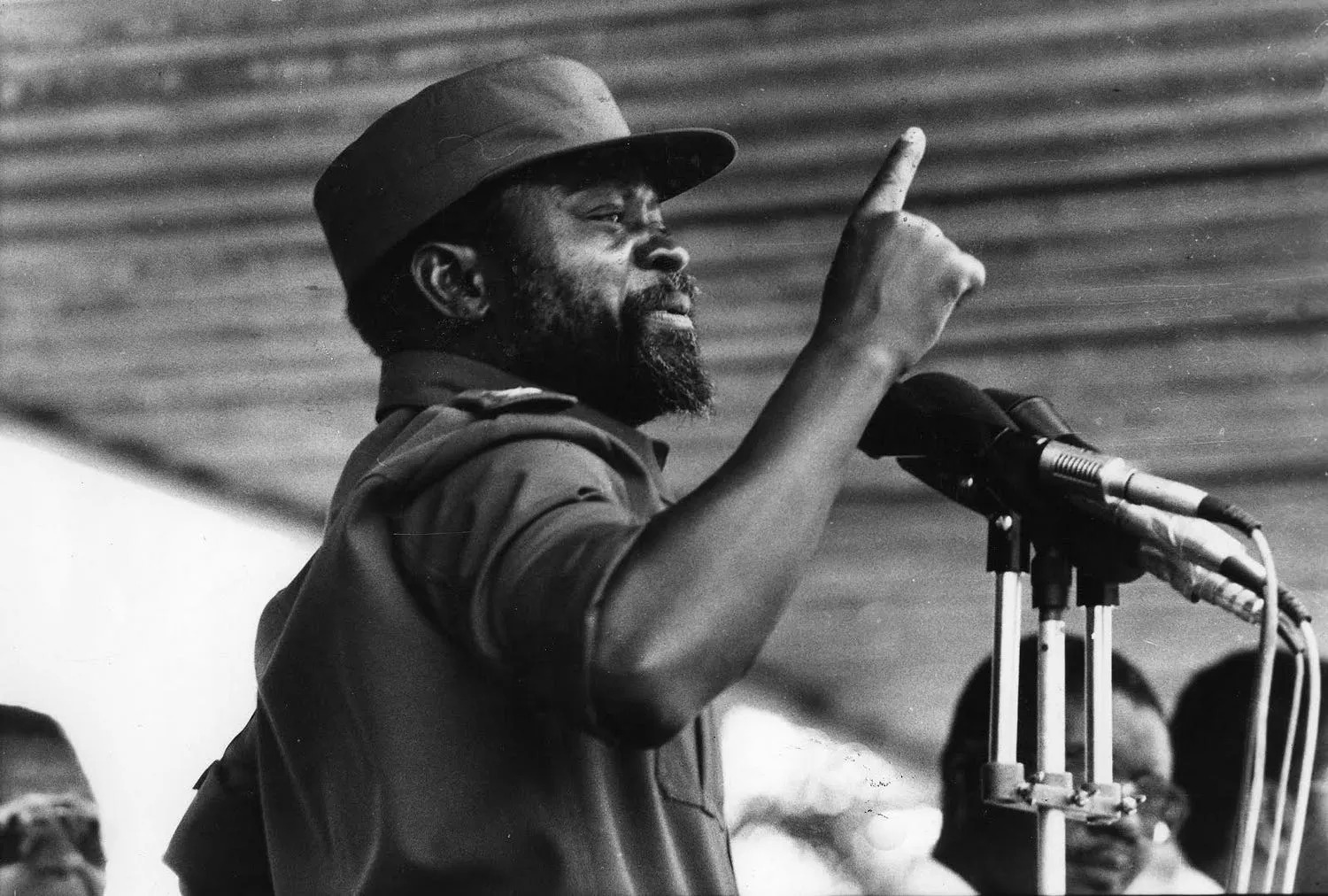
When he returned to his country in 2009, João hid his citizen card. He could not go around showing it, because that would be a provocation. “They don’t like us, they say we are traitors. If we have Portuguese nationality, we have to go after our masters.” He admits to being afraid, especially now. Not so much because of past “politics,” but because of present “politics.”
War returned to the country in 2017, at the hands of the Islamic State. If he were there, he would once again find his freedoms curtailed. It would be impossible to talk publicly with a younger woman. Just as it was during the PIDE era or under FRELIMO. “That is denigrating Islam,” he says. In Portugal, the scenario is different. There is no possible justification for any kind of “human rights violation.”
[João remains outraged, and at the entrance of the temple the imam tries to calm him and reason with him. “Allah is patience, patience, patience…” the religious man repeats over and over, “Allah made woman from Adam’s rib.”]
The stark truth of living in a democracy shows him the opposite. His life journey and that of so many other brothers‑in‑arms is proof of that. “I don’t know why they won’t give it to me,” he says, referring to the pension supplement. “All the other countries have recognized their combatants—except Portugal. In this third‑world Europe! It’s not because I’m Black—here white people are struggling too.” Suddenly, the worth of being Portuguese collapses. “We have to remember what the overseas provinces were. They were provinces! An insult! Do you know what a province is? How can you call Mozambique—a country that could sustain Portugal—a province?! That is silent racism. It reminds me of the second‑class Portuguese in Africa.”
Post a comment